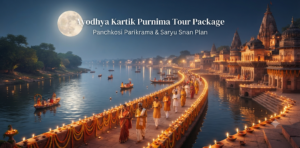
Kartik Purnima is an important pilgrimage occasion in Ayodhya. Devotees visit the city to take a holy dip in the Saryu River, offer prayers at temples and participate in religious activities connected with the Kartik month. The occasion is also associated with the traditional Panchkosi Parikrama, a pilgrimage route covering sacred places around Ayodhya.
An Ayodhya Kartik Purnima tour package can help organise your hotel stay, local transport, temple visits and parikrama arrangements. Since the occasion attracts pilgrims from different parts of India, planning your travel and accommodation in advance is useful.
This guide explains the Kartik Purnima pilgrimage, the Panchkosi Parikrama plan, a suggested three-day itinerary, accommodation options, approximate costs and practical travel advice.
1. What Is Kartik Purnima and Why Is It Important in Ayodhya?
Kartik Purnima falls on the full moon day of the Hindu month of Kartik. It is considered an auspicious day for prayer, charity, bathing in sacred rivers and visiting pilgrimage destinations.
In Ayodhya, devotees visit the Saryu River for a ritual bath and offer prayers at important temples. The city’s religious atmosphere becomes particularly active during the Kartik period, with pilgrims visiting the ghats and sacred places.
Kartik Purnima is also connected with the wider tradition of the Panchkosi Parikrama. Devotees undertake this pilgrimage to visit sacred locations associated with Ayodhya’s religious history. The route, local observances and arrangements can vary, so visitors should confirm the current year’s programme before travelling.
The main places commonly included in an Ayodhya pilgrimage are:
- Shri Ram Janmabhoomi Mandir
- Hanuman Garhi
- Kanak Bhawan
- Dashrath Mahal
- Nageshwarnath Temple
- Ram Ki Paidi
- Saryu River ghats
- Sacred locations along the Panchkosi Parikrama route
For visitors whose main interest is temple sightseeing rather than the parikrama, the Ayodhya Ram Mandir Tour Package provides a separate temple-focused itinerary.
2. What Is Panchkosi Parikrama in Ayodhya?
Panchkosi Parikrama is a traditional circumambulation pilgrimage around the sacred area of Ayodhya. The word Panchkosi refers to five kos, a traditional unit of distance. The route is commonly described as approximately 15 kilometres, although the actual walking distance can differ according to the route and local arrangements.
Devotees undertake the parikrama as an act of religious devotion. Along the way, they may pass temples, sacred spots, traditional settlements and places connected with the religious geography of Ayodhya.
What Should You Know Before Starting?
- Confirm the officially followed route for the current observance.
- Check the starting point and any designated entry or exit arrangements.
- Begin only after considering your fitness and walking ability.
- Carry drinking water and essential medicines.
- Wear comfortable walking footwear.
- Allow extra time for crowds, rest stops and religious activities.
- Follow police and local administration instructions.
The parikrama should not be treated as a fixed sightseeing drive. It is a walking pilgrimage, and the route may involve crowded roads, uneven surfaces and extended periods on foot.
Important: The full Panchkosi Parikrama may not be suitable for everyone. Senior citizens and visitors with mobility difficulties should discuss shorter temple visits or suitable alternatives before planning the trip.
3. When Is Kartik Purnima Celebrated?
Kartik Purnima is observed on the full moon day of the Hindu lunar month of Kartik. Its Gregorian calendar date changes each year, so check the relevant year’s Panchang before booking your journey.
| Festival detail | Information |
|---|---|
| Festival | Kartik Purnima |
| Hindu lunar date | Kartik Purnima, full moon day |
| Main pilgrimage activity | Saryu snan and religious observances |
| Important pilgrimage | Panchkosi Parikrama |
| Main destination | Ayodhya, Uttar Pradesh |
| Travel planning | Confirm the annual local programme |
The exact parikrama schedule, bathing arrangements, crowd-management measures and access restrictions may be announced by the local administration. Do not assume that the same timings or route arrangements apply every year.
Travel tip: If you want to participate in the parikrama, consider reaching Ayodhya at least one day before the main observance. This gives you time to check in, understand the local arrangements and prepare for the walk.
4. What Is the Best Ayodhya Kartik Purnima Tour Package Duration?
A three-day, two-night trip is a practical choice for visitors who want to participate in Kartik Purnima activities and explore Ayodhya’s important temples. If you are travelling with senior citizens or arriving from a distant city, a four-day itinerary may be more comfortable.
| Package option | Duration | Suitable for |
|---|---|---|
| Short pilgrimage | 2 Days / 1 Night | Visitors with limited time |
| Standard Kartik Purnima package | 3 Days / 2 Nights | Parikrama and temple sightseeing |
| Relaxed pilgrimage | 4 Days / 3 Nights | Families and senior citizens |
| Ayodhya and Varanasi | 5 Days / 4 Nights | Travellers visiting two pilgrimage cities |
If you only have one day for local sightseeing, consider the Same Day Ayodhya Tour Package by Car. However, a same-day visit may not provide enough time for a full Panchkosi Parikrama and the Kartik Purnima observances.
5. What Is the 3-Day Ayodhya Kartik Purnima Itinerary?
This suggested itinerary includes arrival, temple sightseeing, the Saryu riverfront and time for the Panchkosi Parikrama. The actual order should be adjusted according to the official schedule and local crowd arrangements.
Day 1: Arrival in Ayodhya and Temple Sightseeing
Arrive in Ayodhya by train, flight or road. Your driver can pick you up from the agreed location and transfer you to the hotel. After check-in and some rest, begin local sightseeing if time and road conditions permit.
Start with Hanuman Garhi, an important temple dedicated to Lord Hanuman. The temple is reached by steps, so visitors with mobility difficulties should allow additional time.
Next, visit Kanak Bhawan, associated with Lord Ram and Goddess Sita. Continue to Dashrath Mahal and explore the nearby religious streets.
You can then visit Shri Ram Janmabhoomi Mandir, subject to the current darshan schedule and entry instructions. Security procedures may require visitors to leave certain belongings outside the temple premises.
In the evening, visit Ram Ki Paidi and the Saryu riverfront. Observe the local arrangements for the Kartik period and check whether the evening aarti is taking place.
Overnight stay: Ayodhya.
Day 2: Kartik Purnima and Panchkosi Parikrama
Keep this day primarily for the main pilgrimage activities. Wake up early and prepare for the Saryu River visit if you intend to take a ritual bath. Follow the designated bathing arrangements and local safety instructions.
After completing the river visit, have breakfast and prepare for the Panchkosi Parikrama according to the officially followed route and schedule.
The traditional route is approximately 15 kilometres, but the actual distance may vary. Walking time depends on the crowd, stops for prayers, weather and the pace of your group. Some devotees complete the route in several hours, while others take longer.
Carry water, light snacks and essential medicines. Avoid carrying heavy bags. If you are travelling with children or older family members, plan suitable rest breaks.
After completing the parikrama, return to the hotel and rest. Do not schedule multiple distant sightseeing stops for this day, as the walking pilgrimage can be tiring.
Overnight stay: Ayodhya.
Day 3: Nageshwarnath Temple, Guptar Ghat and Departure
After breakfast, check out from the hotel. If time permits, visit Nageshwarnath Temple, an important Shiva temple in Ayodhya.
You can also visit Guptar Ghat, a sacred riverside location associated with religious traditions surrounding Lord Ram. Spend some time by the Saryu before beginning your return journey.
If your departure is later in the day, you may include any nearby temple that could not be covered earlier. Your driver can then transfer you to Ayodhya Dham Junction, Ayodhya Cantt, Maharishi Valmiki International Airport or another agreed drop-off point.
For a longer pilgrimage after Kartik Purnima, you can consider the 2 Days Ayodhya Varanasi Tour Package. This can be discussed as an onward extension, depending on your travel dates and transport requirements.
Tour ends: Departure from Ayodhya.
6. What Is the Approximate Cost of an Ayodhya Kartik Purnima Tour Package?
The cost depends on hotel category, group size, vehicle type, travel dates and the number of nights. Demand for accommodation and transport may increase around Kartik Purnima, so festival-period prices can differ from ordinary travel rates.
The following figures are indicative estimates for planning only, not confirmed live rates or a booking quotation.
| Package category | Duration | Indicative price per person | Typical arrangement |
|---|---|---|---|
| Budget | 2 Days / 1 Night | ₹4,500–₹7,000 | Basic hotel and economical transport |
| Standard | 3 Days / 2 Nights | ₹7,000–₹11,000 | Comfortable hotel and local sightseeing |
| Premium | 3 Days / 2 Nights | ₹11,000–₹17,000 | Higher-category hotel and private vehicle |
| Extended | 4 Days / 3 Nights | ₹13,000–₹21,000 | Additional hotel night and sightseeing |
The final cost may change according to the number of passengers, room sharing, vehicle availability and festival demand.
If you are comparing a parikrama-focused trip with a regular temple visit, review the Ayodhya Ram Mandir Tour Package for a different sightseeing plan. You can discuss combining both itineraries if you want more time for temple visits before or after the parikrama.
What Is Usually Included in the Package?
| Usually included when selected | Usually excluded unless confirmed |
|---|---|
| Hotel accommodation for agreed nights | Train and flight tickets |
| Pickup and drop at agreed locations | Meals not mentioned in the quotation |
| Local sightseeing by selected vehicle | Personal expenses and shopping |
| Driver allowance | Donations and temple offerings |
| Toll and parking if specified | Special religious arrangements or passes |
| Basic itinerary coordination | Additional hotel nights |
| Transfers as agreed | Unplanned sightseeing and transfers |
Before booking: Ask whether the vehicle will remain available during the parikrama. In some areas, traffic restrictions may prevent vehicles from reaching the walking route or designated pilgrimage points.
7. Where Should You Stay During Kartik Purnima in Ayodhya?
Choosing suitable accommodation can make the pilgrimage easier, particularly if you plan to start early for the Saryu River visit or parikrama.
You can consider budget hotels, standard hotels, premium properties, guesthouses and dharamshalas. Check the property’s road access, walking distance, check-in time, lift availability and cancellation terms.
| Accommodation type | Suitable for | What to check |
|---|---|---|
| Budget hotel | Solo travellers and small groups | Cleanliness, basic facilities and location |
| Standard hotel | Families and couples | Room size, breakfast and transport access |
| Premium hotel | Travellers seeking more comfort | Amenities, room category and cancellation policy |
| Dharamshala or guesthouse | Pilgrims seeking basic accommodation | Availability, facilities and visitor rules |
How Many Nights Should You Book?
For the standard three-day itinerary, two nights are generally suitable:
- Night 1: Arrival and temple sightseeing.
- Night 2: Kartik Purnima and Panchkosi Parikrama.
- Following day: Breakfast, optional sightseeing and departure.
If you are travelling from a distant city, consider arriving one day earlier or staying an additional night. This gives you more time to rest and reduces the pressure of a tight travel schedule.
Book your room early, but confirm the exact hotel name, room category, total price and cancellation conditions before making payment.
8. How Can You Reach Ayodhya for Kartik Purnima?
Ayodhya is accessible by train, air and road. During major religious observances, however, traffic diversions and vehicle restrictions may affect access to temple areas and the Saryu riverfront.
By Train
Ayodhya Dham Junction and Ayodhya Cantt are important railway stations serving the city. Check train availability for your travel dates and choose an arrival time that allows you to reach your hotel comfortably.
If you plan to participate in early-morning activities, arriving the previous day is advisable.
By Flight
Maharishi Valmiki International Airport, Ayodhyadham, serves the city. Flight routes and schedules depend on the airline and date. Arrange your airport transfer in advance and confirm the hotel drop-off details.
By Road
Ayodhya is connected by road with Lucknow, Varanasi, Gorakhpur and other cities. Private taxis and buses may be available according to your starting location.
During Kartik Purnima, some roads near the ghats and temples may have restricted vehicle access. You may need to walk from a designated parking or drop-off point.
Travel tip: Do not schedule a tight connection between your arrival and the start of the parikrama. Allow time for traffic, hotel check-in and local instructions.
9. What Should You Carry for Panchkosi Parikrama?
A little preparation can make the walking pilgrimage more comfortable. Since the route may involve several hours of walking, carry only essential belongings.
- Comfortable footwear: Choose footwear suitable for extended walking and follow any local instructions about removing shoes at religious locations.
- Drinking water: Carry sufficient water and refill where safe facilities are available.
- Light clothing: Wear comfortable clothes suitable for the weather.
- Essential medicines: Bring prescribed medicines and basic first-aid supplies.
- Identification: Keep an accepted identity document with you.
- Small bag: Avoid carrying heavy luggage during the parikrama.
- Snacks: Carry light food if needed, particularly if you have dietary requirements.
- Emergency contacts: Save your hotel and family contact numbers.
- Cash: Keep some small cash for local purchases and offerings.
Senior citizens and people with health or mobility concerns should consult a medical professional before undertaking a long walking route. Consider a shorter pilgrimage plan if the full parikrama is not suitable.
10. Can You Combine Ayodhya Kartik Purnima with Varanasi?
Yes. You can extend your pilgrimage to Varanasi after visiting Ayodhya. Both destinations are important religious centres and can be included in a longer Uttar Pradesh pilgrimage.
A possible five-day plan is:
| Day | Destination | Main activities |
|---|---|---|
| Day 1 | Ayodhya | Arrival and temple sightseeing |
| Day 2 | Ayodhya | Saryu visit and Panchkosi Parikrama, according to local schedule |
| Day 3 | Ayodhya to Varanasi | Road journey and hotel check-in |
| Day 4 | Varanasi | Kashi Vishwanath Temple and local sightseeing |
| Day 5 | Varanasi | Ganga Aarti and departure |
The Ayodhya-to-Varanasi road journey takes several hours. Keep sufficient time for the transfer, especially if you are travelling immediately after completing the parikrama.
For planning the onward journey, see the 2 Days Ayodhya Varanasi Tour Package. You can discuss adding the Ayodhya Kartik Purnima itinerary before the Varanasi portion.
11. Important Travel Tips for Kartik Purnima in Ayodhya
Kartik Purnima can attract large numbers of devotees. These suggestions can help you organise the visit more comfortably.
- Arrive early: Reach Ayodhya at least one day before the main pilgrimage activities.
- Confirm the parikrama route: Follow the current year’s local administration announcements.
- Book accommodation in advance: Festival-period hotel availability can be limited.
- Keep the itinerary flexible: Avoid scheduling too many temple visits on the parikrama day.
- Follow bathing safety instructions: Use designated areas and follow local advice near the river.
- Plan for walking: The traditional Panchkosi route is approximately 15 kilometres.
- Check traffic restrictions: Vehicles may not be permitted near some temple and ghat areas.
- Protect your belongings: Keep valuables secure in crowded places.
- Make arrangements for older travellers: Discuss rest breaks and alternative sightseeing plans.
- Check departure timings: Leave enough time for station or airport transfers.
12. Frequently Asked Questions About Ayodhya Kartik Purnima Tour Packages
1. What is Kartik Purnima in Ayodhya?
Kartik Purnima is an important Hindu festival observed on the full moon day of Kartik. In Ayodhya, devotees visit the Saryu River, offer prayers and participate in religious activities.
2. What is Panchkosi Parikrama?
Panchkosi Parikrama is a traditional pilgrimage around the sacred area of Ayodhya. It is commonly described as a route of approximately 15 kilometres, although the actual route and distance may vary.
3. How many days are required for an Ayodhya Kartik Purnima tour?
Three days and two nights are suitable for temple visits, the Saryu riverfront and the parikrama. Four days provide a more relaxed schedule.
4. How long does Panchkosi Parikrama take?
The duration depends on walking speed, crowd conditions, rest breaks and religious activities along the route. Allow several hours and follow the current local schedule.
5. Can senior citizens undertake Panchkosi Parikrama?
Some senior citizens may find the full walking route physically demanding. They should consider their mobility and health before participating and may choose shorter temple visits instead.
6. Is Saryu snan part of the Kartik Purnima pilgrimage?
Many devotees visit the Saryu River for a ritual bath on Kartik Purnima. Follow the designated bathing arrangements and local safety instructions.
7. What is the approximate cost of an Ayodhya Kartik Purnima package?
An indicative three-day package may cost ₹7,000–₹17,000 per person, depending on accommodation, group size and transport. The actual price must be confirmed for the selected dates.
8. Are hotels included in the package?
Hotel accommodation can be included for the agreed number of nights. Confirm the hotel name, room category, meals and cancellation policy before booking.
9. Can I visit Ram Mandir during Kartik Purnima?
You can plan a visit to Shri Ram Janmabhoomi Mandir, subject to the temple’s current darshan schedule, security procedures and crowd-management arrangements.
10. Can I book a private car for Kartik Purnima?
Yes, a private vehicle can be arranged for agreed transfers and sightseeing. However, vehicle restrictions may apply near the parikrama route and riverfront.
11. Is the full Panchkosi Parikrama included in the tour package?
The itinerary can include time for the parikrama, but it is a walking pilgrimage. Vehicle transport cannot replace the full walking route. Confirm the starting point and arrangements before booking.
12. Can I combine Ayodhya and Varanasi in one trip?
Yes. You can visit Ayodhya for Kartik Purnima and continue to Varanasi afterwards. Allow enough time for road travel and sightseeing.
13. What should I wear for Panchkosi Parikrama?
Wear comfortable, modest clothing and suitable walking footwear. Carry weather-appropriate clothing and follow local religious instructions.
14. Should I book the hotel early for Kartik Purnima?
Yes. Advance booking is advisable because many pilgrims visit Ayodhya during the Kartik period. Confirm your accommodation in writing.
15. Does the tour package guarantee special darshan?
No. A travel package cannot guarantee VIP darshan, special temple entry or priority access. Temple authorities control all darshan and entry arrangements.
13. Book Your Ayodhya Kartik Purnima Tour Package
An Ayodhya Kartik Purnima pilgrimage can include the Saryu River visit, Panchkosi Parikrama and important temples associated with Lord Ram. With suitable accommodation, transport and a flexible sightseeing schedule, you can organise the journey according to your travel dates and walking requirements.
Ayodhya Varanasi Packages can help arrange a customised pilgrimage itinerary with hotel accommodation, local transfers and temple sightseeing.
For package details and a customised quotation:
- Phone: +91 9557904307
- Website: Ayodhya Varanasi Packages
Share your travel dates, number of passengers, pickup location and hotel preference to request an estimated package cost. Confirm the annual parikrama schedule, hotel arrangements, transport inclusions and payment terms before booking.